
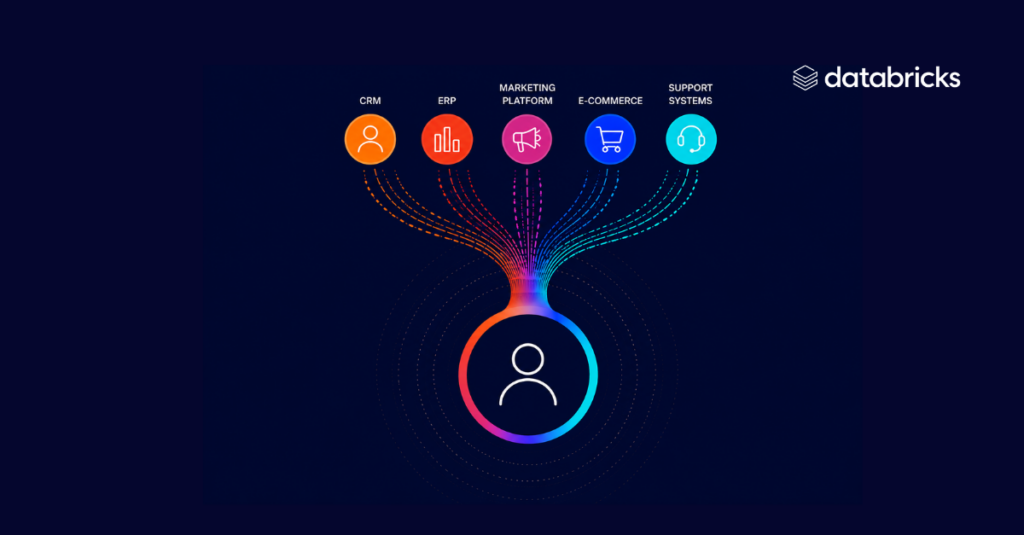
Ask any revenue leader whether they understand their customers, and you’ll rarely hear a confident yes. You’ll hear something more honest: “We understand them in pieces.” Sales knows what a customer said on the last call. Marketing knows which campaigns they clicked. Support knows what broke last week. Each team holds a real, useful piece of the truth—and no one holds all of it.
It’s tempting to treat that gap as a knowledge problem, the kind you fix with smarter people or better instincts. But the gap usually isn’t about what your teams know. It’s about whether the systems holding that knowledge can talk to each other. Before you can build a true Customer 360, you have to confront an uncomfortable reality: understanding your customers is a data problem first.
Every team sees a different customer.
Picture the same customer viewed through three windows. To your sales rep, they’re an opportunity worth a certain amount, last touched two weeks ago. To marketing, they’re an email address that opened four newsletters and downloaded a guide. To support, they’re a ticket number with a history of complaints about onboarding. All three views are accurate. None of them is complete.
The trouble starts when those windows show conflicting details. The CRM lists one company name; the billing system lists a slightly different one. Marketing has a personal email, sales has a work email, and nothing connects the two. So when leadership asks a simple question—“How many customers do we actually have, and which ones are at risk?”—the answer depends entirely on which system you ask. That’s not a reporting hiccup. It’s a sign that your customer data has never been brought together in one place.
Scattered data quietly distorts your strategy.
The instinctive fix is to ask people to coordinate better. Get sales and marketing in a room. Share dashboards. Run a weekly sync. Those habits help, but they treat the symptom rather than the cause. When the underlying records don’t match, more meetings just mean more time spent reconciling whose numbers are right.
The real cost shows up in the decisions you make downstream. You might double down on a segment that looks profitable in one system but unprofitable once you account for support costs hidden in another. You might launch a retention campaign aimed at “churning” customers who actually renewed under a different account ID. Every strategic call you make rests on a picture of the customer, and when that picture is stitched together from mismatched sources, even sharp instincts lead you somewhere wrong.
There’s a quieter risk, too. As more teams turn to AI tools to score leads, predict churn, or personalize outreach, they’re feeding those models the same fragmented data. AI doesn’t fix conflicting records—it scales the consequences of them. A model trained on a distorted view of your customers will produce answers that are fast, confident, and subtly wrong—sophisticated on the surface, built on the same scattered data underneath.
A Customer 360 is the goal. Unified customer data is the requirement.
When people talk about a Customer 360, they usually describe the destination: a single, complete view of each customer that every team can trust. The ability to see, in one place, what someone has bought, how they’ve engaged, where they’ve struggled, and what they’re likely to do next. It’s a genuinely valuable goal, and it’s why so many revenue teams are chasing it.
What gets skipped is the requirement underneath it. A Customer 360 isn’t a dashboard you buy or a feature you switch on. It’s the output of unified customer data—records from across your CRM, marketing platform, support tools, and billing system, consolidated into one reliable source of truth. Without that foundation, a “360 view” is just three partial views displayed on the same screen, still disagreeing with one another. The view is only as honest as the data feeding it.
This is the part that catches teams off guard: they invest in the visualization layer—the reports, the polished profiles, the unified interface—before the data beneath it has been cleaned, matched, and connected.
What it takes to bring your customer data together.
Once you accept that a Customer 360 depends on unified data, the practical question is where all of it actually comes together. Spreadsheets and point-to-point integrations can stitch a few systems together, but they break as you grow and rarely give you a foundation you can trust for both reporting and AI. That calls for a platform built for the job.
This is where a modern data platform like Databricks earns its place. It consolidates information from across your CRM, marketing, support, and billing systems into one governed foundation—then serves as the single source that powers everything downstream, from dashboards to predictive models. Instead of each team pulling from its own system, they all draw from the same well. That’s what turns a Customer 360 from a slide into something your teams actually use day to day.
For more complex environments, consolidation alone isn’t enough. When customer records live across a dozen systems with conflicting names, addresses, and identifiers, you need a way to decide which version is authoritative—and to keep it that way as new data flows in. That’s the role of master data management, or MDM: creating a single, governed “golden record” for each customer that every system can rely on. For organizations at that level of complexity, Profisee is our preferred MDM partner, and it pairs naturally with a data platform to keep your customer records matched, clean, and trustworthy over time.
Why a data audit should come first.
Here’s the catch: a platform like Databricks, even paired with strong master data management, is only as good as the data you put into it. That’s why the smartest first move isn’t standing up new technology—it’s understanding the customer data you already have. A data audit does exactly that.
It maps where that data lives, how systems define the same customer differently, where records duplicate or conflict, and how clean the information really is once you look closely. In our experience, this step consistently surfaces things teams didn’t know about their own data: the fields no one maintains, the integrations that silently stopped syncing, the customer records that exist in three systems with three different stories.
Starting here matters for two reasons. First, it tells you the true scope of the work before you commit budget to a solution—so you’re solving the actual problem, not the one you assumed you had. Second, it gives you a clear, prioritized path. Some gaps are quick wins; others are foundational. A good audit separates the two, so you can sequence the work instead of trying to fix everything at once. Skipping this step is how organizations end up with expensive tools sitting on top of messy data, wondering why the promised single view never materialized.
A data audit is also the first step in a larger arc, not a one-off project. Once you know what you’re working with, the work moves into implementation—and not just the technology. Platforms only deliver when the people who depend on them are brought along and the processes around them are redesigned to match, which is why we approach every engagement through People, Process, and Technology together. From there, ongoing support keeps the foundation healthy as your data, tools, and teams keep evolving.
Where to go from here.
If your teams each hold a different version of the truth, the fix isn’t more coordination or sharper instincts—it’s the unified customer data that makes a real Customer 360 possible, and an honest look at where your data stands today. A data audit turns a vague sense that “our customer data is a mess” into a clear, prioritized plan, and from there the complete customer view becomes something you can actually build.
Start with a data audit. Curious what a complete view of your customers would take? Let’s start by understanding the data you already have.