Transform fragmented AI experiments into enterprise-wide competitive advantages through a proven framework that integrates people, process, and technology.
Most organizations focus on AI’s visible potential—the algorithms, the automation, the insights. But successful AI implementation depends on what lies beneath the surface.
The difference between AI pilots that stall and AI programs that scale comes down to addressing the hidden challenges: governance gaps, data quality issues, resistance to change, leadership misalignment, and fragmented initiatives without enterprise vision.
The AI Operating Model provides a comprehensive framework to address both what’s visible and what’s hidden—ensuring your AI investments deliver lasting competitive advantage.
parallax iceberg here
Implementation Stages
Prove value quickly, build systematically, scale confidently.
STAGE 1
Prove Value
Ideation
Surface business-specific AI opportunities and build shared ownership across roles.
Evaluation
Apply a structured framework to prioritize opportunities by desirability, feasibility, and viability.
Proof-of-Concept
Test priority ideas with prototypes that validate results and ROI.
STAGE 2
Establish Foundation
Production Deployment
Embed validated AI solutions into enterprise systems and workflows.
Adoption Enablement
Drive user trust and adoption through change management and training.
Impact Measurement
Track business outcomes and refine solutions using real-world data.
STAGE 3
Scale & Evolve
Innovation Pipeline
Create a systematic process to source, prioritize, and manage new AI opportunities.
Program Buildout
Develop the teams, skills, practices, and technology that make AI delivery repeatable and scalable.
Governance & Compliance
Institutionalize standards, risk management, security, and adoption practices for sustainable growth.
Three dimensions working together create AI maturity.
Success requires developing capabilities across all three dimensions simultaneously. Technology without people readiness fails. Process without proper technology infrastructure can’t scale. People without clear processes lack direction.
People: The foundation for adoption
AI only creates value when people use it, trust it, and build upon it.
Ownership and roles: Clear accountability for AI strategy, implementation, and ongoing management across the organization
Education & enablement: Teams equipped with knowledge and skills to use AI effectively and understand its limitations
Resourcing strategy: Appropriate allocation of talent, budget, and time to sustain AI initiatives beyond pilot phase
Process: The structure for alignment
Structured processes keep AI initiatives aligned with business goals and manageable as they scale.
Innovation & delivery framework: Systematic methods to identify, prioritize, and implement AI opportunities that deliver real business value
Governance: Standards for data usage, model validation, risk management, and ethical AI deployment
Impact tracking system: Measurement of business outcomes, not just technical metrics, with data-driven refinement
Technology: The infrastructure for scale
The technical foundation that makes AI operationally viable and production-ready.
Data ecosystem: Data pipelines, storage, and quality controls providing clean, accessible information for AI models
User interfaces: Intuitive interfaces making AI insights actionable and integrated into existing workflows
Automation & integration: Seamless connections with existing systems so AI enhances rather than disrupts operations
Technology alone doesn't create AI success.
Most AI initiatives focus narrowly on technology, which explains why so many fail to deliver expected results. The algorithm works perfectly in testing but fails in production because users don’t trust it. The model is sophisticated but provides predictions no one knows how to act on. The system is technically impressive but can’t access clean data to make accurate recommendations.
Our approach recognizes that successful AI implementation requires equal attention to People, Process, and Technology—in that order. When you begin with people—understanding their needs, involving them in the process, preparing them for change—you create the foundation for adoption. When you establish clear processes before deploying technology, you ensure AI solutions align with business objectives rather than becoming expensive science experiments.
This layered approach transforms how organizations think about AI, moving from “what technology can we implement?” to “what business challenges can we solve, and what do our people and processes need to succeed?”
Ready to get started?
Build your AI maturity with guidance from real humans who understand both strategy and implementation.
Lorem ipsum dolor sit amet, consectetur adipiscing elit. Nunc id justo auctor, tempus mauris nec, sollicitudin nibh. Duis vel ultricies orci. Sed convallis neque vel sodales tincidunt.
2. TBD
Lorem ipsum dolor sit amet, consectetur adipiscing elit. Nunc id justo auctor, tempus mauris nec, sollicitudin nibh. Duis vel ultricies orci. Sed convallis neque vel sodales tincidunt.
3. TBD
Lorem ipsum dolor sit amet, consectetur adipiscing elit. Nunc id justo auctor, tempus mauris nec, sollicitudin nibh. Duis vel ultricies orci. Sed convallis neque vel sodales tincidunt.
4. TBD
Lorem ipsum dolor sit amet, consectetur adipiscing elit. Nunc id justo auctor, tempus mauris nec, sollicitudin nibh. Duis vel ultricies orci. Sed convallis neque vel sodales tincidunt.
Bottleneck Removed with AI-Enabled Micro Applications
A life sciences consulting firm partnered with Mutually Human to speed up research-driven presentations. AI-powered micro applications reduced manual effort while improving accuracy, governance, and scalability.
From Manual Financial Reporting to a Scalable Fabric-Powered Intelligence Platform
A mid-sized construction organization partnered with Mutually Human to modernize financial and project reporting. By automating data pipelines, centralizing financial data in Microsoft Fabric, and replacing spreadsheet-driven processes with governed analytics, the organization gained faster access to trusted insights, reduced manual effort, and built a scalable foundation for future growth and advanced analytics.
A medical manufacturing organization partnered with Mutually Human to scale its analytics capabilities without increasing internal headcount. Through a flexible pod model, we delivered senior-level data engineering, business intelligence, and analytics support—improving reporting consistency, accelerating insights, and establishing a scalable analytics foundation for future growth.
Turning Pricing Chaos into a Scalable Growth Engine
A growing transportation and logistics organization partnered with Mutually Human to modernize its pricing operations. By centralizing data, embedding governance, and designing a custom pricing and analytics solution aligned to real workflows, the organization gained faster insights, improved pricing confidence, and a scalable foundation for revenue and margin growth.
Driving Retail Growth with Microsoft Fabric: Unified Data, Better Insights, Bigger Savings
A leading retailer partnered with Mutually Human to unify fragmented sales, inventory, and customer data using Microsoft Fabric. The new platform delivered real-time insights, improved inventory management, and empowered teams with AI-ready analytics—driving smarter purchasing, stronger supplier negotiations, and faster decision-making across the business.
AI Recipe Optimization Enhances Paint Line Performance
Faced with rising scrap rates and inconsistent product quality, a Tier 2 automotive manufacturer needed a better way to manage complex paint line settings. With over 25 unpredictable variables in play, manual adjustments led to frequent delays and material waste. Mutually Human developed a custom AI-powered recipe optimization solution that automated real-time adjustments—cutting scrap, improving consistency, and enhancing overall equipment effectiveness (OEE).
Article • Artificial Intelligence • Data Analytics • Data Management
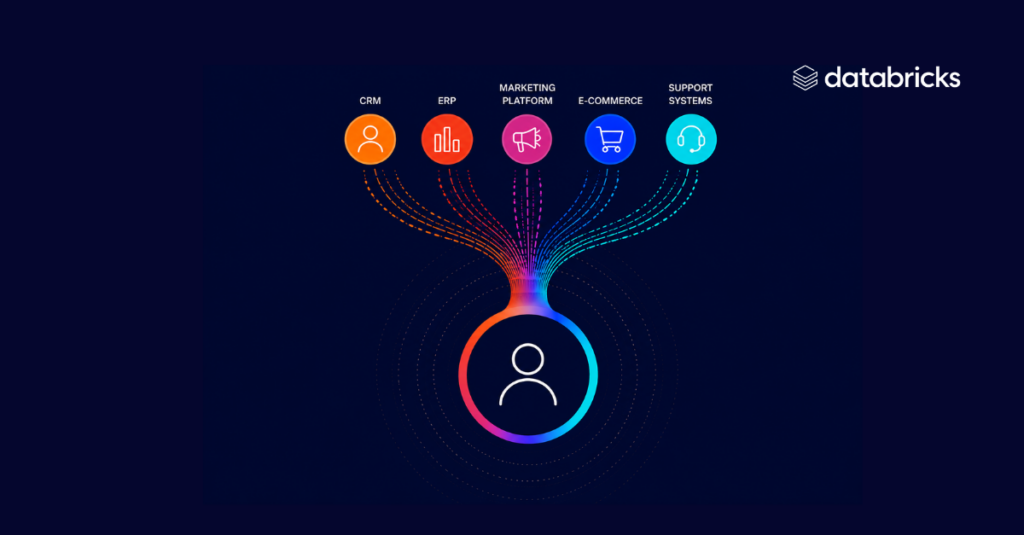
Why Understanding Your Customers is a Data Problem First
Many organizations think they have a customer understanding problem when they actually have a data problem. Customer information is scattered across systems, creating fragmented insights…
Article • Artificial Intelligence • Business Intelligence • Data Management
From Bronze to Gold: A Technical Look at How Medallion Architecture Trains Responsible AI to Win
Learn how Medallion Architecture strengthens responsible AI by improving data quality, reducing bias, and creating Bronze, Silver, and Gold pipelines that help machine learning and…
Article • Artificial Intelligence • Business Intelligence • Customer experience • Data Analytics • Data Management
Healthcare’s Data Challenge: Why Fragmented Systems Are Holding Back Patient Outcomes
Disconnected systems make it harder for providers to deliver quality care. Learn how Microsoft Fabric helps healthcare organizations unify their data, reduce costs, and improve…
Article • Artificial Intelligence • Business Intelligence • Data Analytics • Data Management
The Total Cost of Ownership: Microsoft Fabric vs. Legacy Data Platforms
Licensing costs are just the beginning. This article explores the total cost of ownership—comparing Microsoft Fabric to legacy data platforms across infrastructure, operations, governance, and…