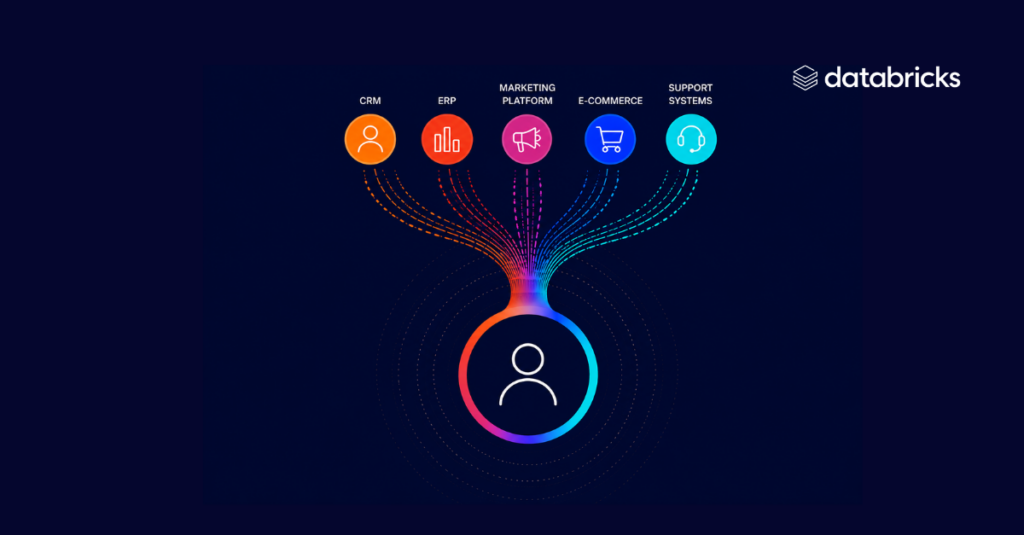

This week, our technology partner Databricks closed a $5 billion funding round at a $190 billion valuation, with a revenue run-rate of $7 billion growing more than 80% year over year. The headline, though, came from CEO Ali Ghodsi, who told Forbes that AGI, or artificial general intelligence, has already arrived.
His reasoning is worth hearing out. Judged by what computer scientists would have called AGI twenty years ago, meaning machines that can talk, reason, and spot patterns in enormous quantities of data, we’re already there. It just doesn’t feel like it, because we’ve had time to get used to it. As Ghodsi put it: “If all AI progress was frozen today, I think we have what we need to proceed.”
You can debate the AGI claim. Plenty of people will. But the most useful sentence in the story isn’t the one in the headline. It’s Ghodsi’s description of what enterprises are actually asking for: “agents working across their business that remember context, deliver accurate answers, and execute work without blowing through their budgets.”
Read that again. Nothing in it asks for a smarter model. Context. Accuracy. Work that actually gets done. Those aren’t intelligence problems. They’re meaning problems. And the name for the missing piece is one most leadership teams haven’t put on a whiteboard yet: ontology.
The word your AI strategy is missing
“Ontology” is borrowed from philosophy, where it means the study of what exists. The business version is more practical than it sounds. An ontology is a written map of the things your business is made of (customers, orders, products, machines), what each of those words really means, and how they all connect to one another.
The fastest way to understand it is to think about a new employee’s first few months. They have access to every system on day one, yet they ask questions constantly. Is a “client” in the CRM the same thing as an “account” in billing? Which of these two revenue numbers is the real one? Why do these dashboards disagree about last month’s sales? Notice that none of those are questions about the data itself. They’re questions about what the data means. When the questions finally stop, we say the person has “learned the business.” An ontology is that knowledge written down, in a form both people and machines can use.
That might sound like a data dictionary. It isn’t. A data dictionary tells you a field is called “cust_status” and holds text. An ontology tells you what “active” actually means, that billing and support define it differently, and how those two definitions map to each other. It captures relationships and rules, too: a customer can have many orders, an order belongs to exactly one account, and revenue doesn’t count until the invoice clears. Definitions, relationships, and rules. That’s the whole idea.
Here’s the uncomfortable part: your organization already runs on an ontology. It’s just not written down. It lives in the heads of your veterans, the people that new employee keeps asking: the analyst who knows that report quietly counts trial users as customers, the controller who knows which revenue number is the real one, the operations lead who knows the inventory count in the ERP runs a day behind the floor. Humans reconcile these differences constantly and invisibly, in hallway conversations and email threads.
An AI agent can’t attend those conversations. If the knowledge isn’t written down in a form a machine can use, then as far as your AI is concerned, it doesn’t exist.
Why this matters now, not five years ago
Two things changed.
First, AI stopped just answering and started acting. When AI was a chat window, a wrong answer was an inconvenience, and a human caught it before it went anywhere. Agents are different. They take multi-step actions across systems: updating records, drafting orders, routing approvals. An agent working from the wrong definition of “customer” doesn’t just say something wrong. It does something wrong, to the wrong account, at machine speed, with your name on it.
Second, raw intelligence is becoming table stakes. Every serious platform now offers models that reason impressively. Your competitors can buy the same models you can. What they can’t buy is your context: the accumulated meaning of how your business actually works. The models are shared. Your ontology isn’t. That makes it one of the few durable advantages left in an AI strategy.
This is why the market news matters. Investors didn’t just hand Databricks $5 billion because its models are clever. They funded the company because it sits underneath the enterprise data that gives AI something true to work with. The market has already priced in this shift. Most AI roadmaps haven’t.
What this looks like in practice
The honest answer: it looks like unglamorous work. Sitting down across departments and agreeing on definitions. Documenting which system is the source of truth for each entity. Building the governance that keeps those answers current instead of letting them drift back into tribal knowledge. Engineering the pipelines that make it all reliable.
It’s not the exciting part of AI. It’s the part that determines whether the exciting part works.
This is where we spend much of our time with clients, building AI-ready data foundations on platforms such as Databricks, with governance the business can trust. It’s also why we built AnthmAI, our platform for putting AI to work safely across an organization. AnthmAI grounds AI in your organization’s own knowledge and governs how it’s used. It can be built with Databricks as a source, so the agents your teams rely on are working from the same shared meaning as the rest of your data ecosystem. The platform holds the data, the ontology gives it meaning, and governance keeps it true.
What the foundation makes possible
It’s fair to ask what all this groundwork actually buys you. The answer is the version of AI your leadership team has been picturing all along.
The one we hear about most from clients right now is conversational analytics: the ability to ask your data a question in plain English and trust the answer. “What was our margin by region last quarter?” “Which customers are trending toward churn?” No ticket to the BI team, no three-week wait for a dashboard revision. Just an answer, in seconds, that holds up in the boardroom.
Here’s the catch. Conversational analytics is only as good as the shared meaning underneath it. Ask that margin question against data where “margin” is calculated three different ways, and you’ll get an answer that’s fluent, confident, and wrong. The ontology is what makes the difference between an AI that sounds right and one that is right.
And analytics is just the start. The same foundation supports agents that act on those answers: flagging the at-risk customer, drafting the follow-up, kicking off the workflow. Once your data means one thing, everything built on top of it compounds.
Where to start
You don’t start by buying more AI. You start by finding out what your data actually means today, and where it disagrees with itself.
That’s exactly what our Data Audit is built to do. Over three to five weeks, we map how data actually flows through your organization, assess the technical reality underneath it (infrastructure, quality, governance, and team capabilities), and deliver a prioritized, execution-ready roadmap tied to your business goals. Not a slide deck of observations. A plan.
The AGI debate will keep filling headlines. Meanwhile, the organizations pulling ahead with AI are the ones doing quieter work: writing down what their data means, so their AI can finally be right about their business — not just impressive.
If you’re ready to find out where your data agrees with itself, and where it doesn’t, start with a Data Audit.